MACE
MACE portal

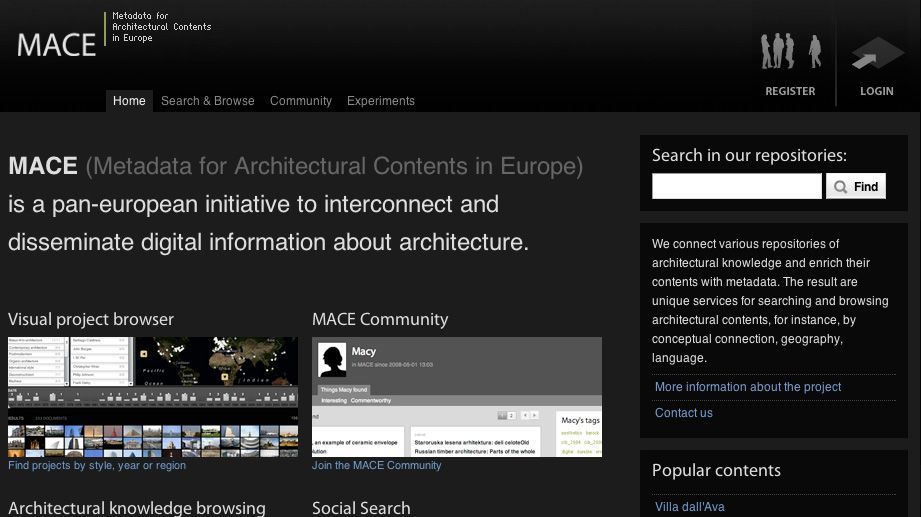
The project connects various repositories of architectural knowledge and enriches their contents with metadata. The result are unique services for searching and browsing architectural contents, for instance, by conceptual connection, geography, language.
Radial visualization

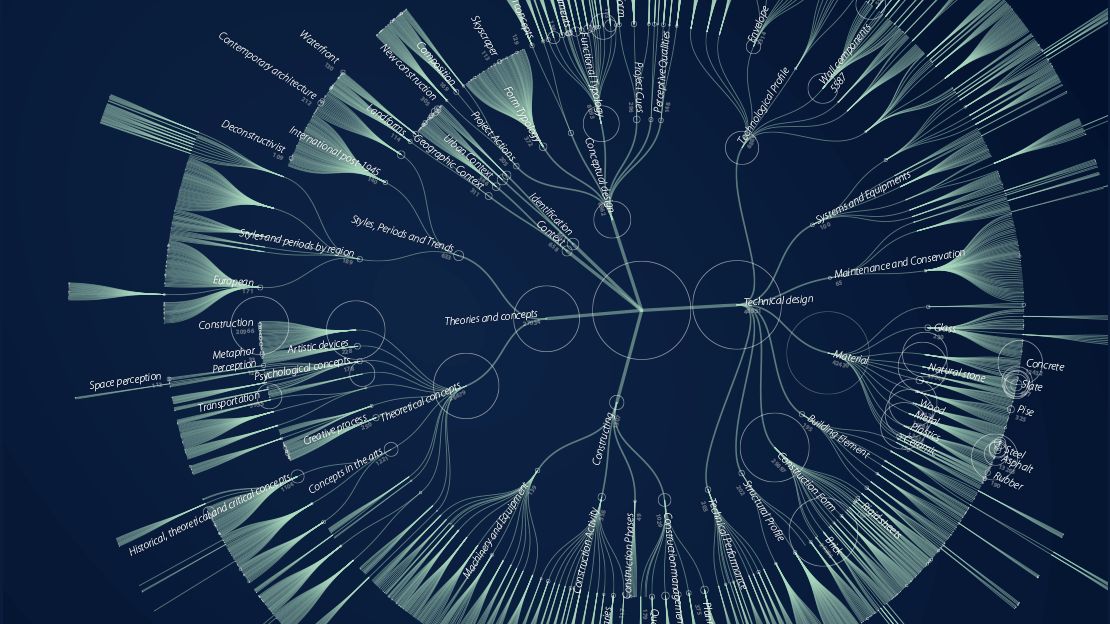
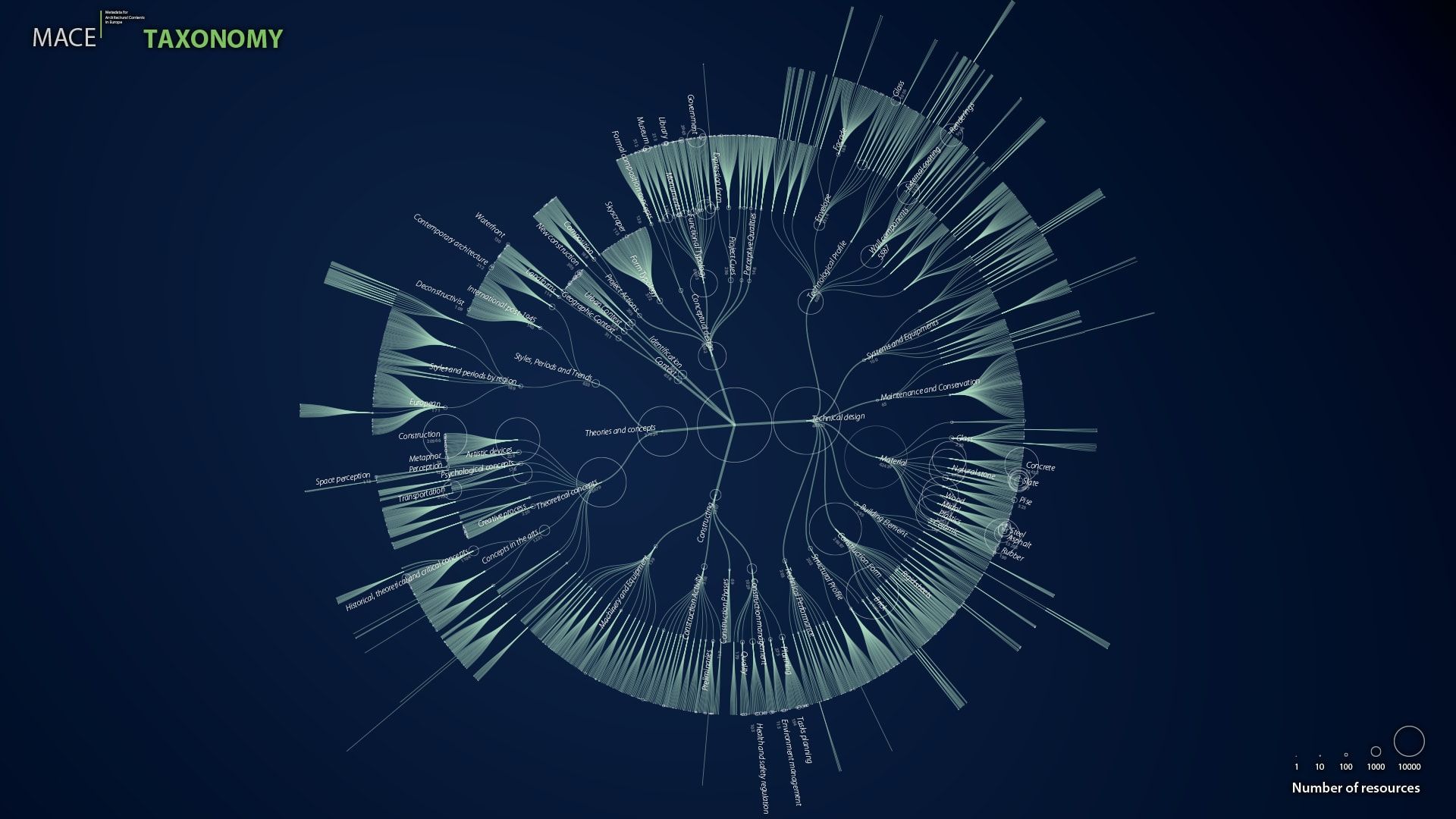
The MACE classification glossary plays a central role in content retrieval and access. The browsing of the vocabulary and associated contents is supported by an interactive visualization of the terms and their relations. I extended a classical radial tree layout towards a structured tag cloud, where more frequently applied terms are presented larger. Additionally, aligned splines make it easier to grasp the tree structure and bring an organic look-and-feel into the visualization.
maeve installation
At the Venice Biennale 2008, the mæve installation connects the entries of the EveryVille student competition and puts them into the larger context of MACE content and metadata. By placing physical project cards on an interactive surface, the visitors can explore an organic network of projects, people and media. mæve has been designed and developed by a team of students and researchers under the lead of Prof. Boris Müller and Till Nagel. I initiated the project, consulted the design and development team, and realized the side projections.

